
Throughout the Continent, it is not uncommon to come across fabrics that are regarded not merely as clothing but as contributions to the society’s historical identity. Over time, handwoven textiles such as Faso Dan Fani from Burkina Faso, and the Kunta from Niger have become living artifacts of cultural preservation, deeply embedded in the collective memory of their communities and shaping the way people co-exist.
The Melhfa is one such garment. Its origins trace back to the Indian subcontinent, specifically present-day India and Pakistan. This long, rectangular cotton cloth, typically measuring around 4.5 meters by 1.6 meters, made its way into African traditional dress through ancient trade routes, including the Silk Road. It has since become a staple across various African countries, particularly within the Sahel region.
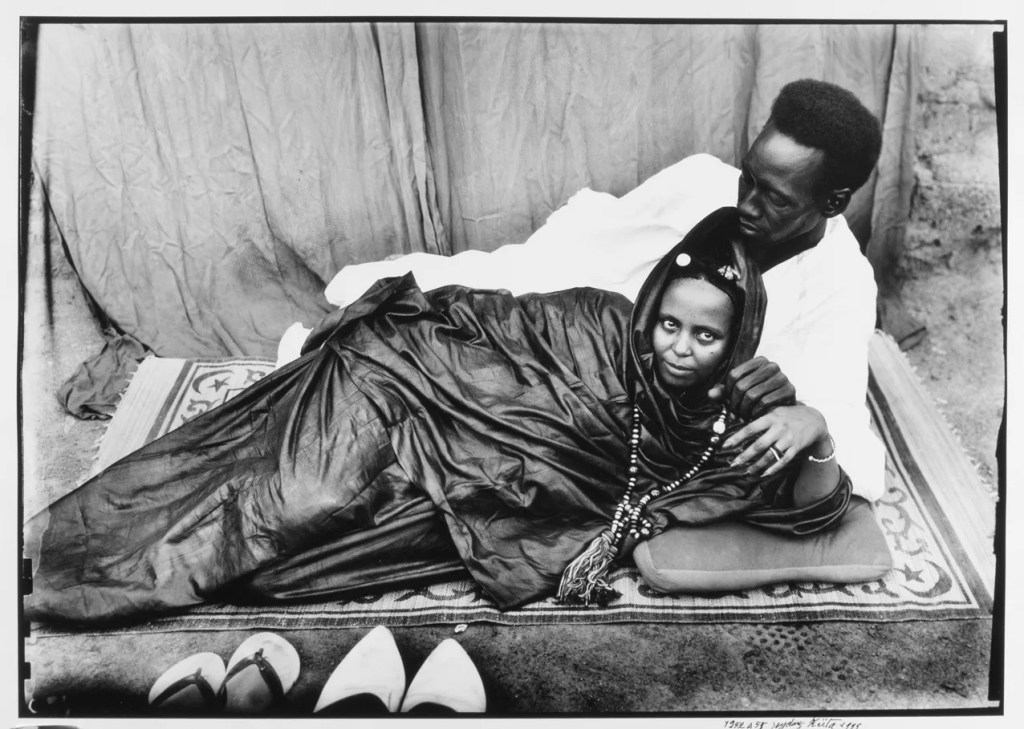
The Melhfa is known by different names depending on the region: Lafaya in Northern Nigeria, Niger, and Chad; Tiyyab in Sudan; Dampé in Mali, and simply Melhfa in Mauritania. Despite its regional variations in name, the significance of the garment remains consistent, highlighting its wide-reaching cultural resonance. It serves practical functions, offering protection from sand and sun, while also symbolizing elegance and resilience.
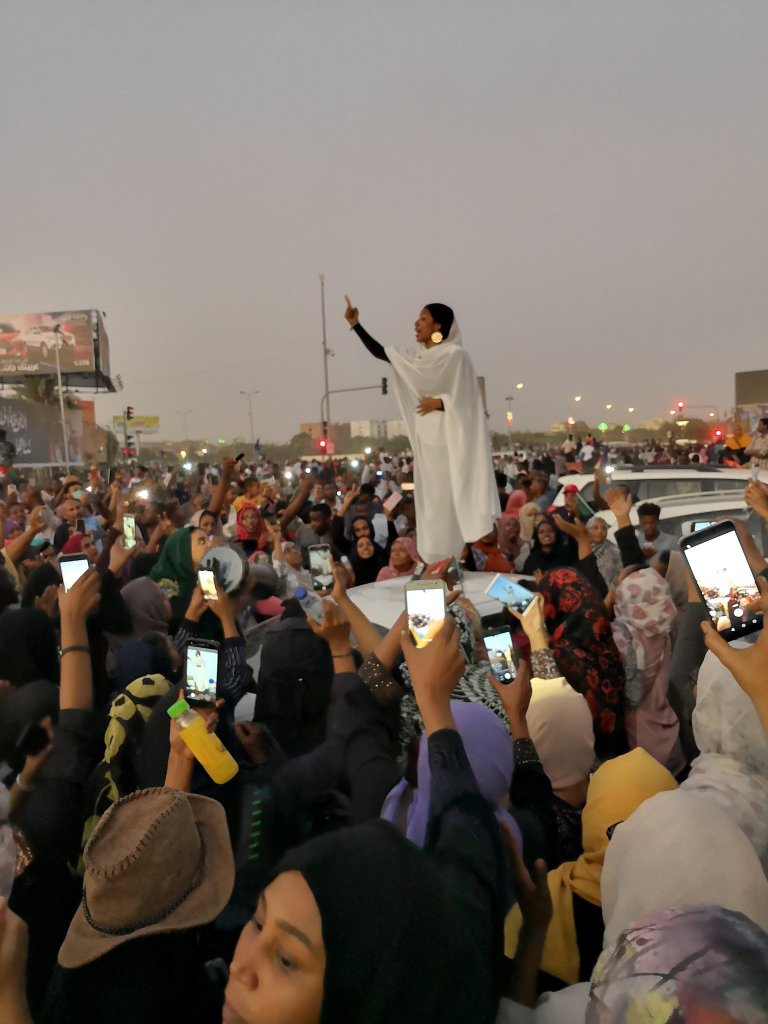
During the 2019 Sudanese revolution, a striking image of student Alaa Salah captured global attention. Standing atop a car and addressing a crowd of protestors while dressed in a white Melhfa, she embodied both resistance and remembrance. The image served as an ode to Sudanese heritage and a powerful call for youth to remain rooted in their identities during times of political struggle.
Another emblematic figure is Aminatou Haidar, a prominent Sahrawi human rights activist, who is known for wearing the Melhfa with pride in her public appearances. For Sahrawi women, the fabric has become a visible symbol of resistance, worn proudly in defiance of continued occupation. It affirms identity, dignity, and a long-standing legacy of steadfastness.

Across the Sahel, women continue to represent the Melhfa’s dual power, both as a culturally symbolic garment and a practical everyday piece. What was once closely associated with older generations is now regaining relevance among youth, who are reclaiming the tradition with pride. Today, the Melhfa is worn at traditional ceremonies such as weddings, as well as for daily tasks like running errands.
Available in a vibrant array of colors, the Melhfa is valued according to the quality of its craftsmanship, which often determines its use and the type of occasion for which it is worn. As the garment evolves within contemporary contexts, more brands such as Ja.mun.mai and Ikalook are joining the movement by offering their own modern reinterpretations of the Melhfa, which are beginning to surface in both local and global markets.
FAD’s Mulfe Series honors the cultural richness of the Melhfa throughout the Sahel region. Through visually compelling narratives and designs, the series explores the garment’s origins and impact, highlighting its versatility and enduring legacy. By showcasing Sahelian craftsmanship and heritage, the series asks: What would it mean to center the Melhfa, not as a trend, but as a living archive, within the global creative industry?

Fatou Alhya wearing the FANTA dress and SAFAAH choker (Tiohtià:ke), shot by Sarah Stalon.
 FAD
FAD 